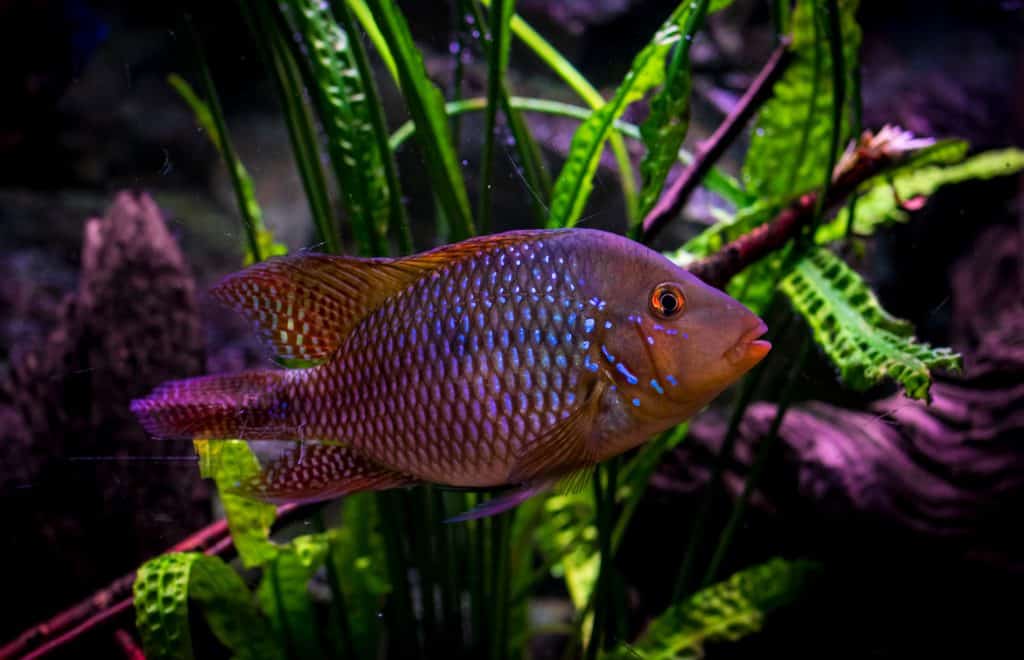
Jewel Cichlid (Hemichromis Bimaculatus)

Jewel Cichlid (Hemichromis Bimaculatus): Ultimate Care Guide

Jewel Cichlids are considered an aggressive species, and therefore are not easy to care for. They are not recommended for beginners to the fishkeeping hobby, and should be carefully looked into before purchase. Jewel Cichlids are a hardy species that are fairly tolerant of changes to their water parameters, but their water parameters should still be monitored carefully.

Tire Track Eel (Mastacembelus armatus)

Tire Track Eel (Mastacembelus armatus): Ultimate Care Guide

Although not a true eel, the Tire Track Eel’s spiky form allows it to move and behave similarly to an eel. Track eels have lengthy bodies and snouts and can reach lengths of up to 26 inches. They are tan or light brown in hue and feature dark zig zag lines along their body, akin to tire tracks. Tire Track eels are also known as zigzag eels and white spotted spiny eels. Their natural habitat is in Southeast Asia, namely in India, Thailand, and Myanmar

Dragon Moray Eel (Echelycore pardalis)

Dragon Moray Eel (Echelycore pardalis): Ultimate Care Guide

Dragon moray eels (Echelycore pardalis), also known as leopard moray eel, tiger moray eel, or Japanese dragon eel, are on one of the more visually striking, beautiful moray eels. Their bodies are an orange-brown color, covered with spots and streaks of black and white, which continues right into their mouths as well. They have long …

Dragon Moray Eel (Echelycore pardalis): Ultimate Care Guide Read More »

Ruby Tetra (Axelrodia Riesei)

Ruby Tetra (Axelrodia Riesei): Ultimate Care Guide

Ruby Tetras are considered an easy fish to care for once they are established. Ruby Tetras only come from one place in Columbia, so they are not as forgiving if their water parameters change. They are used to consistency when it comes to their care. By establishing regular water parameter checks and changes, you can provide your Ruby Tetras with the care they require so they can thrive.

Geophagus Brasiliensis

Geophagus Brasiliensis (Pearl Cichlid): Ultimate Care Guide

Also known as the Pearl Eartheater and Pearl Cichlid, Geophagus Brasiliensis is a robust fish native to Brazil, Paraguay, and Uruguay. It’s also present in a number of different countries where it’s sometimes classified as an invasive species. Geophagus Brasiliensis has one, and sometimes two, large black spots along its sides. This fish will change …

Geophagus Brasiliensis (Pearl Cichlid): Ultimate Care Guide Read More »

Whisker Shrimp (Macrobrachium Lanchesteri)

Whisker Shrimp (Macrobrachium Lanchesteri): Ultimate Care Guide

Common Name(s) Whisker Shrimp Scientific Name Macrobrachium Lanchesteri Origin Peninsular Malaysia, Thailand, Myanmar, southern China, Java, and Indonesia Temperature 75-86 degrees F Size 1-2 inches Minimum Tank Size 5 Gallons Food & Diet Scavengers Lifespan 1-2 years Water pH 6.5-8.5 Tank Mates Neon Tetras, Pygmy Corys, Harlequin Rasboras, White Cloud Minnows, Glassfish Breeding Difficult. Males …

Whisker Shrimp (Macrobrachium Lanchesteri): Ultimate Care Guide Read More »

Domino Damsel (Dascyllus trimaculatus)

Domino Damsel (Dascyllus trimaculatus): Ultimate Care Guide

The Domino Damsel is a hardy tank inhabitant with striking coloration. When juvenile, they are black with a white spot on the forehead and white spots on either side. This spot pattern gives them alternative name of Three Spot Damsel. When mature these spots mostly disappear, leaving adults with a solid body color ranging from …

Domino Damsel (Dascyllus trimaculatus): Ultimate Care Guide Read More »

geophagus winemilleri

Geophagus Winemilleri (Stripetail Geophagus Cichlid): Care Guide

Geophagus Winemilleri grows to magnificent coloring and is an amazing mid-sized “earth-eater” cichlid for the semi-aggressive, and occasionally even quiet, community aquarium.
Also known as the Stripetail Geophagus Cichlid, Geophagus Winemilleri is a stunning and surprisingly quiet mid-sized cichlid native to Venezuela and possibly adjacent places. It is one of the most unusual and colorful “earth-eating” species.