Phoenix Tetra Care: Diet, Lifespan, Size, Breeding & More

Phoenix Tetras are a vibrant fish with a grey silvery body, and their body also has a delicate gold colored sheen. Their fins have a beautiful red coloration with white extensions that look very ornate. Mature females are noticeably more stocky than the males are. The males have longer filaments on their fins, and they show off a flashy bright red color. The caudal fin is translucent in color in the female Phoenix Tetra. Mature male Phoenix Tetra have elongated dorsal and anal fins. These differences make it easy to distinguish male Phoenix Tetras from females.
Pearl Gourami: Care, Tank Size, Tank Mates, Size & More

The pearl gourami (Trichopodus Leerii) is a species of fish native to Thailand, Malaysia, and the islands of Borneo and Sumatra. They are mainly found in lowland swamps near the sea where the acidic water is more to their liking. Though some have been introduced into Singapore and Columbia.

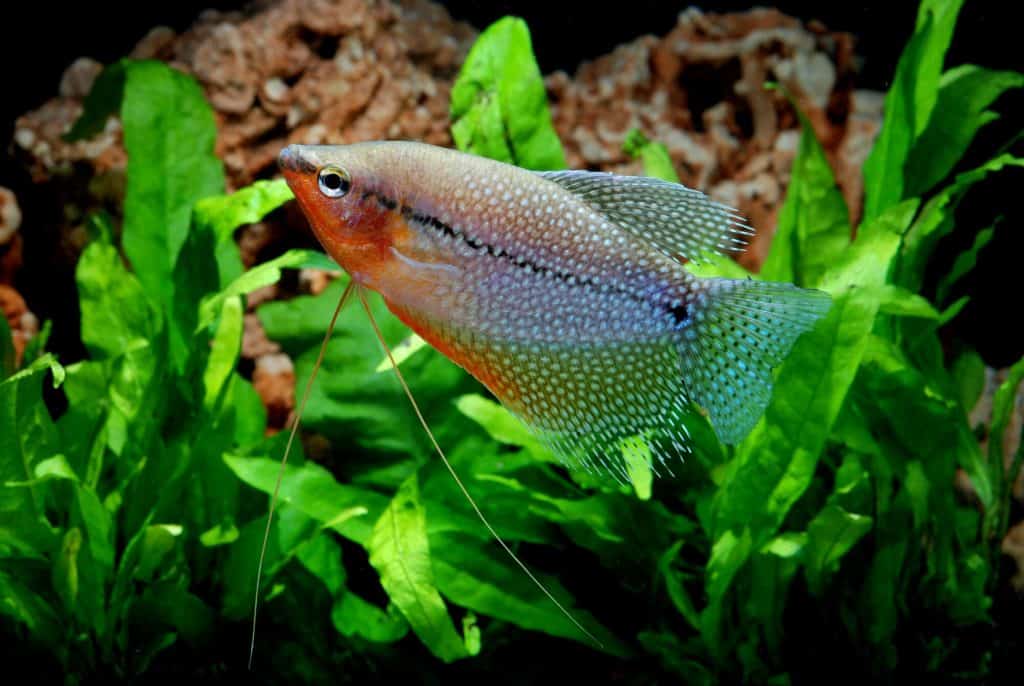
Pearl gourami are considered to be one of the more attractive species of gourami. They have the usual elongated body shape of other gouramis, but thin and long ventral fins which appear like long feelers that dangle while they swim. As well as a long horizontal black stripe that runs down along their length, starting at their mouth and ending at the dorsal fin.

Checker Barb Care: Diet, Lifespan, Tank Size & Tank Mates

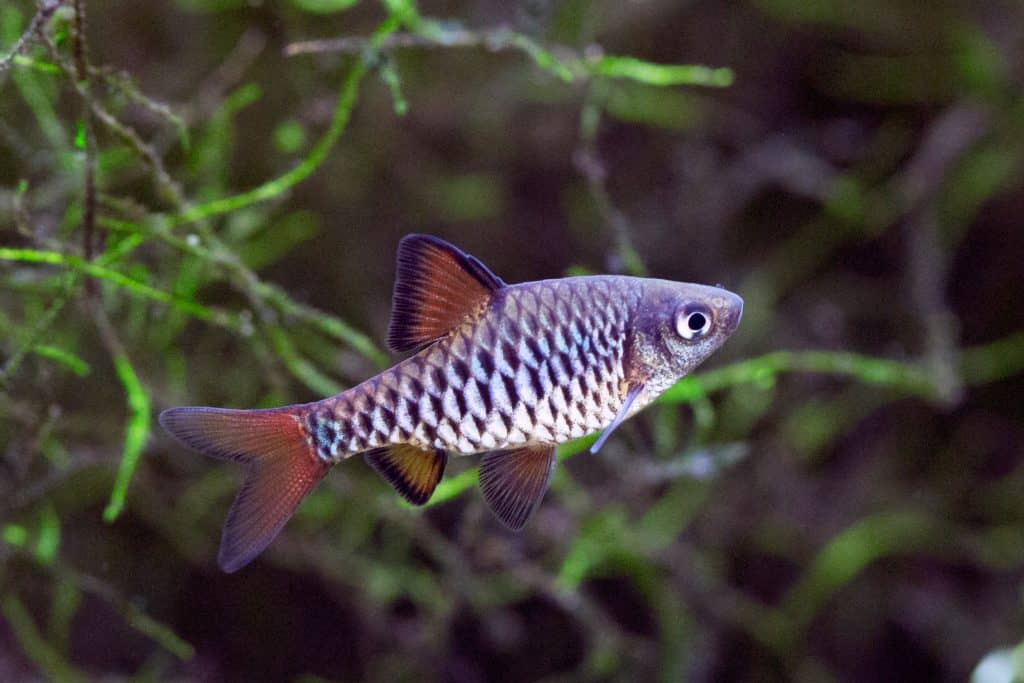
Checker Barb fish are a tropical, freshwater fish named for their distinctive black and silver checkered markings and colorations that resemble a checkerboard. This pattern is so distinct that even their nicknames refer to their checkerboard patterning. They are described as having a torpedo-esque shape to their bodies, and a round middle. The males are slimmer and smaller than the females. The juvenile Checker Barb fish may have little fin color, while the mature males have red fins with a black outline. The females have a more yellowish color to their fins. The color of both male and female fish will get darker as they become ready to spawn, and when they are fed a good diet of a wide variety. A well set up aquarium will help this nano schooling fish thrive, and will also help aid in deepening its coloration.

Betta Albimarginata: Care, Size, Lifespan, pH & Breeding

The Betta Albimarginata can be identified by a combination of characteristics. They have a blackish head ventrally, and greyish yellow dorsally. They have an orange colored blotch on their operculum. The operculum is the facial structure on bony fish that supports their gills. They have fin patterning, except on their pectoral fins. They have a broad white distal band, and a dark submarginal band. The submarginal band has a sharp outer margin, a less sharp inner margin, and a plain red inner portion. Females are a simple mottled brown body color, while the males end up being a more orange color.

Pothos in Aquariums: Are Pothos Plants Good for Aquariums?

Pothos Plants are a popular plant that many people use in their homes for its toxic air purifying properties. It has also become a common plant that is used in aquarium setups. They are very beneficial, and they are easy to propagate. The Pothos Plant can provide your aquarium with oxygenation. If you plant your Pothos into your aquarium substrate, it will aerate the water as it uses up the carbon dioxide the fish expel and then it releases the oxygen back into the water. They provide more oxygen and absorb more nitrates than other plants.

Best Aquarium Water Conditioner: The Ultimate Guide

Many inexperienced aquarists make the mistake of overlooking proper water conditioning before adding fish to an aquarium. Most people understand that fish are sensitive to water temperature fluctuations. After adding water into an aquarium, most people would check the temperature, but often disregard the fact that there is chemical additives in tap water. The tap …

Best Aquarium Water Conditioner: The Ultimate Guide Read More »

Salt and Pepper Corydoras: Care, Size, Lifespan & Breeding

Color pattern is somewhat varied among the Salt and Pepper Corydora fish. The fish can be identified by its light tan body covered with black and shiny silver spotting and broken striping. This is a much smaller species than the similarly named Peppered Cory Catfish, and when doing research about the Salt and Pepper Corydora the information could be easily confused between the two species.